Gym Supplements Worth Your Money in 2026 (and the Ones That Are Hype)
Our coaching team's honest take on which supplements actually do something (protein, creatine, electrolytes, pre-workout), which ones are a waste of money, and how to buy safely. No brand worship, no BS.
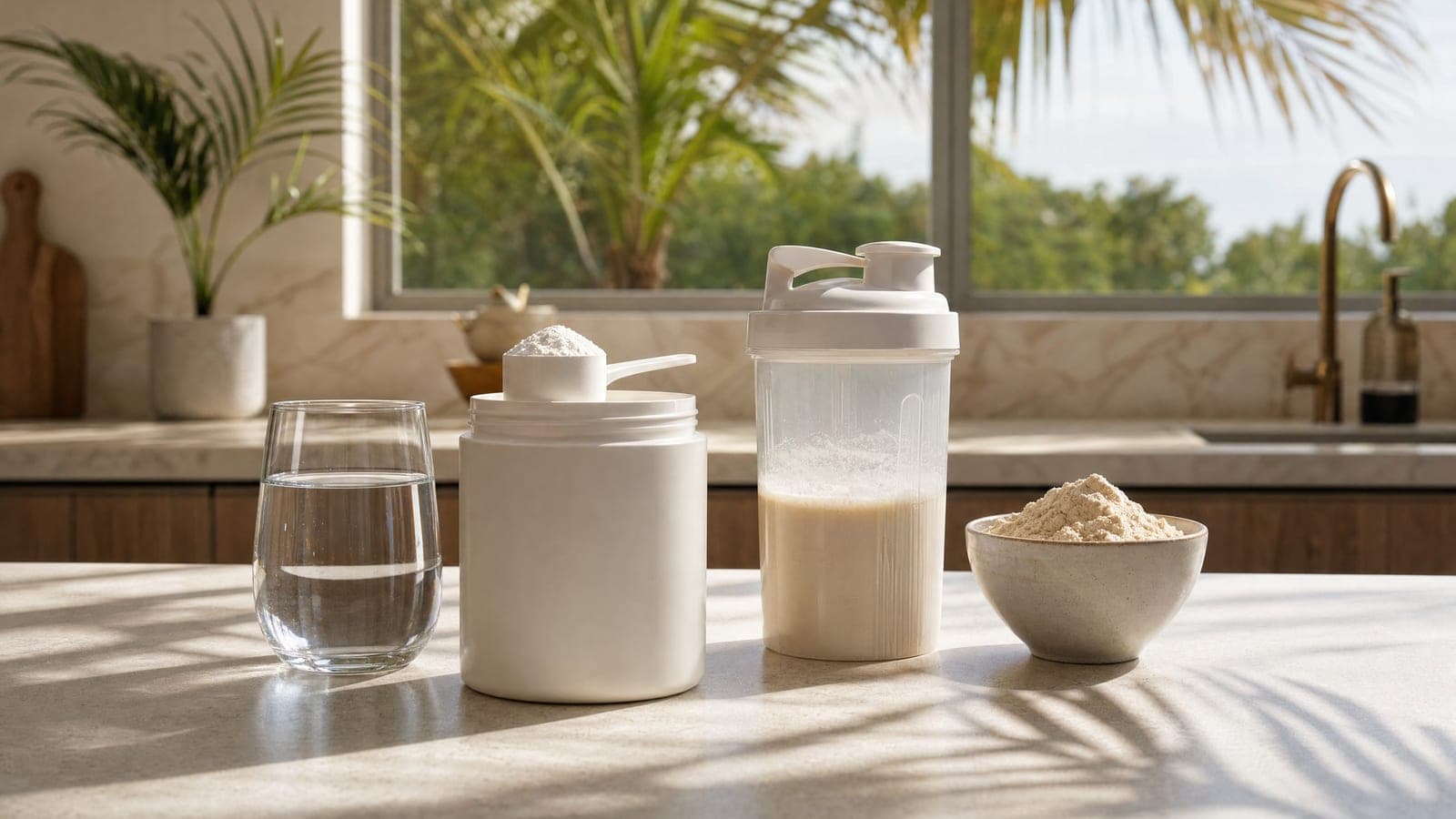
The supplement industry runs on hope. Walk into any store and you'll see a wall of powders promising things that food and training already do better. The truth is simple: a small handful of supplements have real evidence behind them, and most of the rest are expensive urine.
We're the coaching team at Gallo 8 Gym. Here's the honest tier list: what's worth it, what's situational, and what to skip. One thing up front: supplements are the last and smallest piece. If your training, sleep and protein intake aren't dialed in, no powder fixes that. New to lifting? You can skip supplements for your first few months; read the beginner's guide to lifting first.
Worth it: protein powder
It's not magic. It's just convenient protein. If you struggle to get about 0.7 g of protein per pound of body weight (1.6 g per kilogram) from food alone, a scoop of whey is the easiest way to close the gap. Think of it as food, not a drug. Whey is one of the most studied and most affordable options. If you have kidney disease, ask your doctor how much protein is right for you.
Protein that does the job
Our coaches recommend it as convenient protein to hit your daily target. Nothing more, nothing less.
Affiliate disclosure: As an Amazon Associate we earn from qualifying purchases.
Worth it: creatine monohydrate
Creatine monohydrate is the most effective legal supplement for strength and power, according to the International Society of Sports Nutrition. Taking 3 to 5 g a day, along with your training, helps most people lift a little more and recover better between sets. Skip the fancy 'new forms': plain monohydrate is the most studied and usually the cheapest. You don't need to load or cycle it. If you're under 18, talk to your doctor first; the American Academy of Pediatrics advises teens against it.
A supplement with decades of research
3 to 5 g a day, every day. Plain monohydrate is all you need.
Affiliate disclosure: As an Amazon Associate we earn from qualifying purchases.
Situational: pre-workout and electrolytes
Pre-workout can help your training energy, but it's basically expensive caffeine with a few extras. If a strong coffee does the job, save your money. Skip it within about 6 hours of bedtime, because caffeine that late cuts into the sleep that actually builds muscle, and keep your total caffeine under 400 mg a day (one C4 can has 200 mg). In Miami heat, electrolytes also earn their place once you're sweating heavily; more on that in our hydration guide.
Situational: useful when they fit
An energy drink option for early or low-energy sessions, for adults only. Use it only if it solves a real problem for you.
Affiliate disclosure: As an Amazon Associate we earn from qualifying purchases.
The 'insurance' tier: fish oil and a multivitamin
These aren't performance boosters. They're general health support. If your diet is short on fatty fish or vegetables, omega-3 fish oil and a basic multivitamin can help fill the gaps. They're optional and generally safe for healthy adults, but fish oil can interact with blood thinners, so check with your doctor if you take one. The multivitamin below is a men's formula without iron, so women may want a different one.
Health-gap insurance
General health support if your diet has gaps, not performance magic.
Affiliate disclosure: As an Amazon Associate we earn from qualifying purchases.
Skip or be skeptical: BCAAs, fat burners, test boosters, mass gainers
- BCAAs: largely pointless if you already eat enough protein, which food and a scoop of whey cover. Save your money.
- Fat burners: mostly caffeine plus marketing, and some have been found to contain hidden drugs. The fat loss comes from your diet, not the pill.
- 'Testosterone boosters': almost universally useless. Sleep, lift, and lose body fat instead.
- Mass gainers: mostly cheap carbs plus some protein, which you can get from real food for less.
How not to get scammed
Supplements don't need FDA approval before they're sold, and the FDA keeps finding hidden drugs in some weight-loss and pre-workout products. In May 2026 it warned about a pre-workout that contained DMAA, a stimulant that can raise blood pressure. A few habits protect you:
- Look for an NSF Certified for Sport or Informed Sport seal, which means a third party tested the product for banned and hidden substances.
- Skip anything sold as a fat burner, testosterone booster, or 'legal steroid.'
- Be wary of big promises, like fast fat loss or 'clinically proven' muscle gains with no study named.
- Tell your doctor what you take, especially if you're on any medication.
No supplement replaces good coaching
Dial in the training first. At Gallo 8 Gym in Little Havana, our bilingual coaches can build your training plan in personal training. Try the gym first with a $5 day pass, no contract, no upsell.
Come visitTrain with us in Little Havana
Gallo 8 Gym is an independent Hispanic community gym: no contracts, no signup fees, right across from Miami Dade College.