Beginner's Guide to Lifting in Miami: Where to Start Without Wasting Money or Getting Hurt
Never been in a gym? This is the no-fluff guide a Miami coach actually gives new lifters: what to do your first week, what equipment matters, how to avoid injury, and how much to spend.
If you've never lifted before, walking into a gym for the first time is the hardest part. Everyone looks like they know what they're doing, the equipment is unfamiliar, and the YouTube programs you're considering are written for people who've already been training for two years.
I'm Coach Alex at Gallo 8 Gym in Little Havana, and I've coached about 200 clients. This is the guide I give new lifters on day one: no supplements, no 'hacks,' no expensive gear. Just what actually works.
Week 1: Don't try to do too much
One of the biggest mistakes beginners make is going hard on day one, getting sore for a week, and never coming back. You can build a real foundation training 3 days a week, 45 minutes a session.
Your first week, do these three workouts on alternating days (Monday, Wednesday, Friday is the easiest to remember):
Day A: Squat and push
- Goblet squat: 3 sets of 8 reps with a moderate dumbbell
- Dumbbell bench press: 3 sets of 8
- Standing dumbbell shoulder press: 3 sets of 8
- Plank: 3 sets of 30 seconds
Day B: Pull
- Lat pulldown: 3 sets of 10
- Seated cable row: 3 sets of 10
- Dumbbell bicep curl: 3 sets of 10
- Hanging knee raise: 3 sets of 10
Day C: Legs
- Leg press: 3 sets of 10
- Romanian deadlift with dumbbells: 3 sets of 10
- Walking lunges: 3 sets of 10 per leg
- Calf raises: 3 sets of 15
What equipment actually matters
Forget specialty shoes, weight belts, lifting straps, knee sleeves and pre-workout for your first three months. You need:
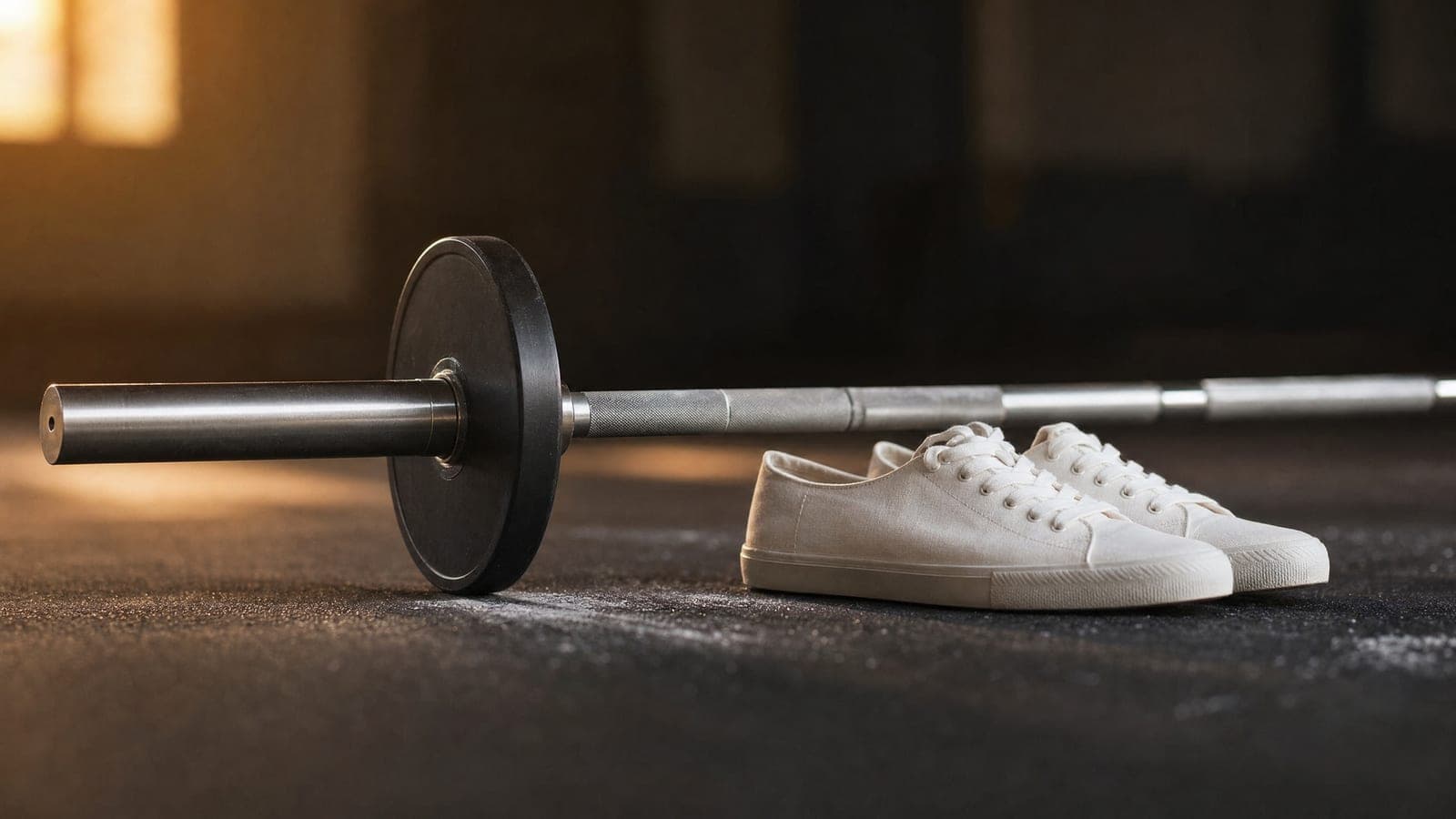
- Athletic shoes with a flat sole. Running shoes aren't ideal because they're too cushioned. Converse, Vans, or a basic cross-training shoe works better for lifting.
- Comfortable shorts and a t-shirt. That's it.
- A water bottle.
- Optional: a small notebook or phone notes to write down what weights you used. This is how you know you're progressing.
The only gear you actually need to start
Our coaches recommend keeping it simple: a flat-sole shoe, a water bottle, and decent socks. None of it is expensive, and you may already own most of it. Skip the belts, straps, and pre-workout until you've trained for a few months.
Affiliate disclosure: As an Amazon Associate we earn from qualifying purchases.
- View on Amazon(opens Amazon in a new tab)
Converse Chuck Taylor
Classic flat sole, perfect for squats & deadlifts
- View on Amazon(opens Amazon in a new tab)
Hydro Flask 32oz
Wide mouth, 24hr cold, leak-proof
- View on Amazon(opens Amazon in a new tab)
BERING Athletic Socks 6-Pack
Ankle length, cushioned, men's sizes
How to avoid getting hurt
- Warm up for 5 minutes before lifting: light cardio, then a couple of light sets of your first exercise.
- Form before weight. Always. The ego lift on day one is the injury on day three.
- Don't skip rest days. Muscles grow when you recover, not when you lift. Three days a week with rest days in between is plenty for beginners, and it's easier to recover from and stick with than six.
- Sleep 7+ hours. Lifting on 5 hours of sleep is just damage with extra steps.
- Ask for a form check if you're unsure. Most experienced lifters in a community gym are happy to help, and a few personal training sessions can lock in good technique early.
How much should you spend?
For your first six months, you need a gym membership. That's it. No supplements (food is fine, so eat protein with every meal), no equipment, no programs. At Gallo 8 that's $37 a month, month to month, with no signup fee. Compare the true first-year cost, fees included, before you pick a gym; our student gym discount guide shows how.
If you genuinely can't figure out form on your own and YouTube isn't cutting it, two to four sessions of personal training in your first month are worth more than any supplement stack.
Why Miami is actually a good place to start
- Year-round warm weather means you can walk or bike to the gym every day.
- Many Little Havana gyms have bilingual staff, which matters if English isn't your first language or you want to ask detailed questions in Spanish.
- Independent neighborhood gyms in Miami are often cheaper than the big gyms in Brickell or the Beach, and you can train at a real gym for under $40 a month.
Not sure where to actually train? Our breakdown of gyms in Miami walks through chains vs independents so you don't overpay your first month.
Try a real beginner-friendly gym
Gallo 8 Gym in Little Havana: a $5 day pass to see if it's for you, bilingual coaches for personal training, and no contract.
Come visitTrain with us in Little Havana
Gallo 8 Gym is an independent Hispanic community gym: no contracts, no signup fees, right across from Miami Dade College.