Soccer Strength Training: 8 Coach-Recommended Exercises for Faster, Stronger Players (2026)
Want to play faster, win more 50/50 balls, and stay off the injury list? These are the 8 gym exercises our coaches give soccer players in Miami — the strength, power, and durability work that separates pros from weekend players.
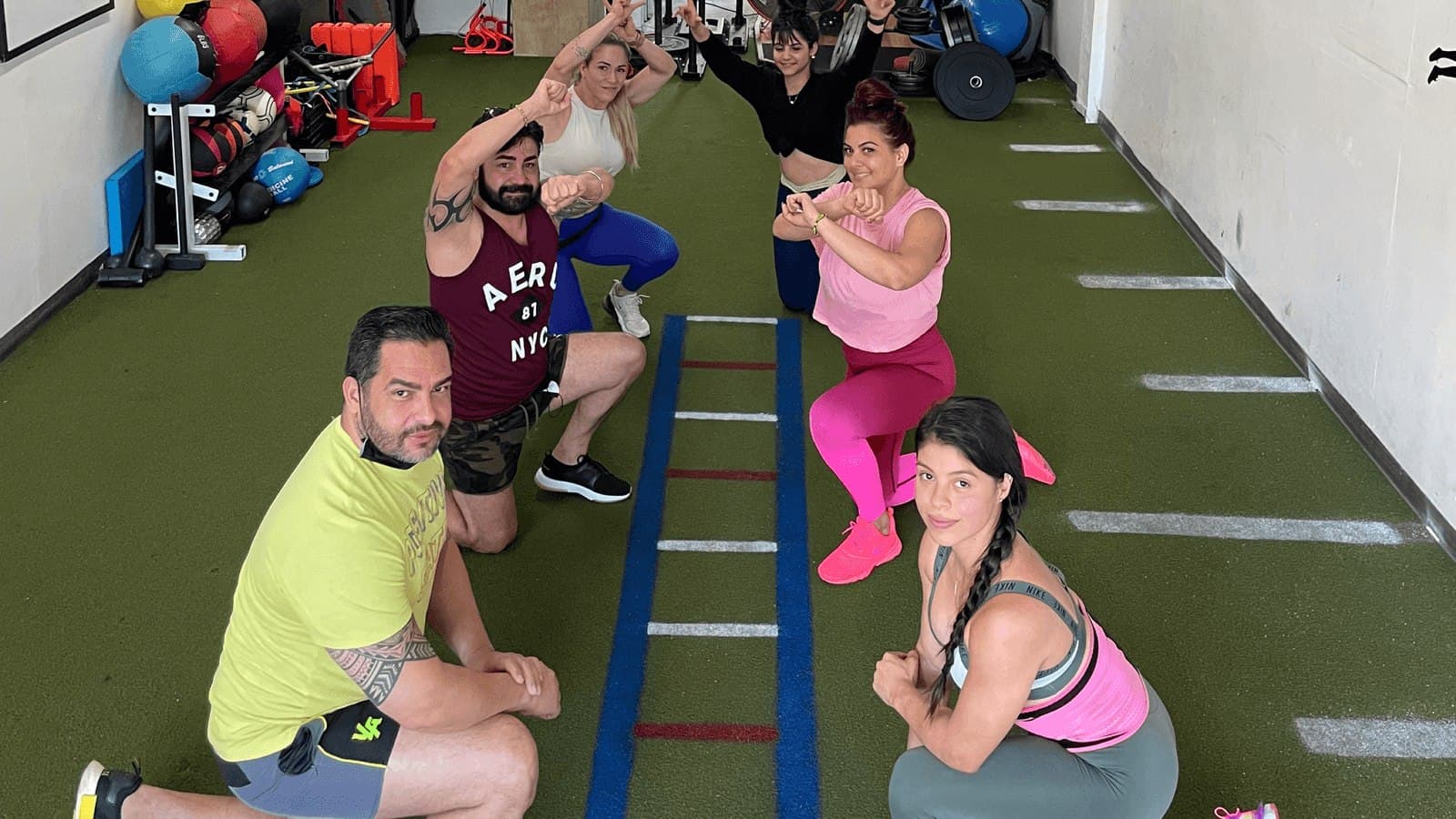
With the 2026 World Cup being played right here in Miami this summer, every fútbol player in the city is fired up. But watching Messi or Mbappé won't make you faster — the gym work behind players like them is what does. Speed, the first step, and staying healthy through a full season are all built in the weight room, not just on the field.
We coach soccer players at Gallo 8 Gym in Little Havana, and these are the eight exercises our coaches actually program for them — built for acceleration, change of direction, and durability. Brand new to lifting? Start with our beginner's guide to lifting in Miami first. And if the tournament has you motivated, here's how to train during the World Cup in Miami.
Why the gym makes you a better soccer player
Soccer is a strength and power sport disguised as an endurance one. The fastest player to the ball usually wins it, and the strongest in the contact keeps it. Just as important: most amateur seasons don't end because of skill — they end because of a pulled hamstring or a tweaked knee. The right gym work builds the speed that wins balls and the resilience that keeps you playing. Two focused sessions a week is enough.
1. Bulgarian split squats — single-leg power for the first step
Soccer is played on one leg at a time — you sprint, cut, and shoot off a single foot. The Bulgarian split squat (rear foot on a bench, front leg doing the work) builds exactly that single-leg strength and balance. It also exposes and fixes the left-right imbalances that cause injuries. Start with bodyweight, then hold dumbbells. This is the most soccer-specific lower-body exercise there is.
2. Romanian deadlifts — the posterior chain that drives your sprint
Your glutes and hamstrings are your sprint engine — they fire every time you accelerate. Romanian deadlifts (a hip hinge with a slight knee bend, lowering the bar to mid-shin) build that posterior chain directly, and strong hamstrings are far harder to pull. Keep your back flat and feel the stretch; don't round over to chase the floor.
3. Nordic hamstring curls — the #1 way to stay off the injury list
Hamstring strains are the most common injury in soccer, full stop. The Nordic curl — kneeling and lowering your body forward slowly while a partner or strap anchors your ankles — is the single best-studied exercise for preventing them. It's brutally hard at first; start with a tiny range of motion and build up. Few exercises give you this much injury insurance for the time spent.
4. Lateral band walks & hip work — change direction without blowing a knee
Soccer isn't run in straight lines — it's cuts, shuffles, and changes of direction. The muscles that control that side-to-side movement (your hip abductors) protect your knees when you plant and turn. Lateral band walks, monster walks, and banded hip work wake those muscles up. Cheap resistance bands are all you need, and they double as a warm-up before every session.
Bands for hip and change-of-direction work
A loop-band set for lateral walks and hip activation, plus a long band for mobility and warm-ups. The cheapest, most-used gear a soccer player can own.
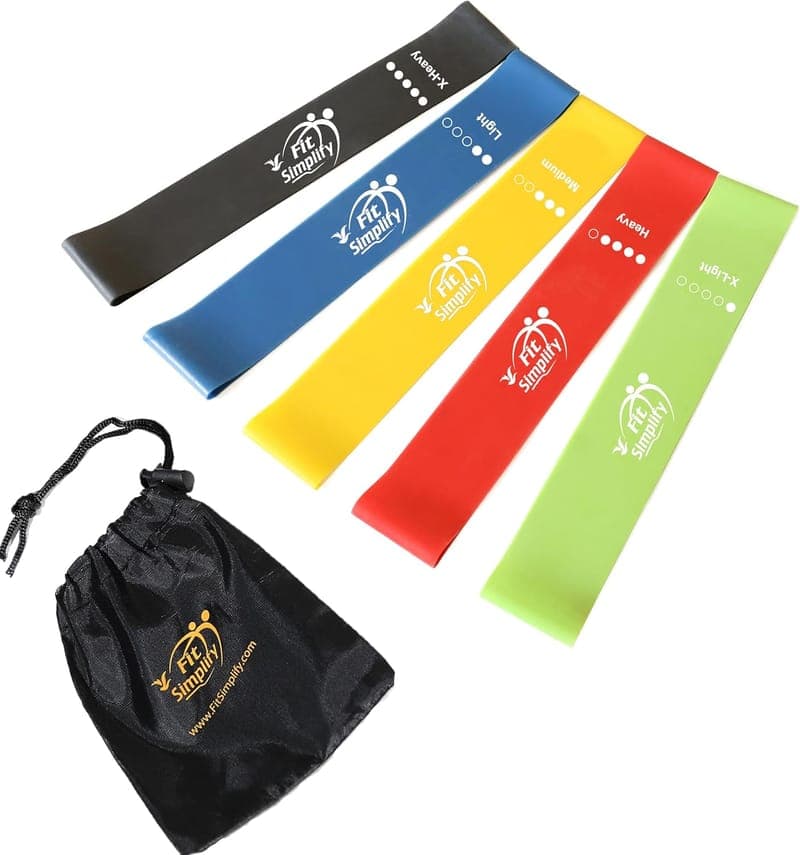
Fit Simplify Resistance Bands
5-band set, light to heavy, with carry bag
4.5(133K)View on Amazon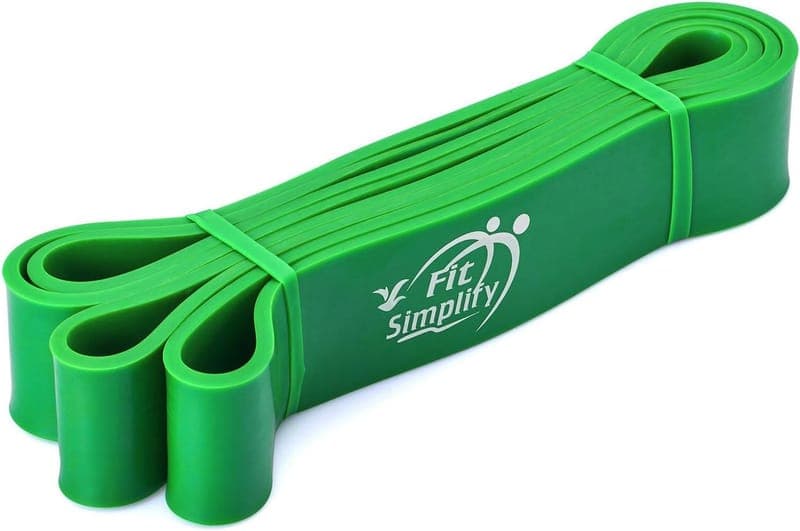
Fit Simplify Pull Up Bands
Assisted pull-ups, stretching, mobility work
4.4(1.6K)View on Amazon
Affiliate Disclosure: As an Amazon Associate, we earn from qualifying purchases. This helps support our gym at no extra cost to you.
5. Box jumps & broad jumps — explosive acceleration
Acceleration is just force put into the ground quickly. Jumping trains exactly that. Box jumps build vertical power and land you softly (easy on the knees), while broad jumps train the horizontal power that translates directly to your sprint start. Keep the reps low and explosive — 3 to 5 quality jumps per set, fully recovered. This is quality over quantity.
6. Speed rope & footwork — conditioning and quick feet in one
Jumping rope is the most underrated soccer tool in the gym. It builds the springy, reactive calves and ankles that quick feet depend on, trains coordination, and conditions you — all at once. Five minutes of rope is a better warm-up than any treadmill, and it travels anywhere. If you do one thing on this list at home, make it this.
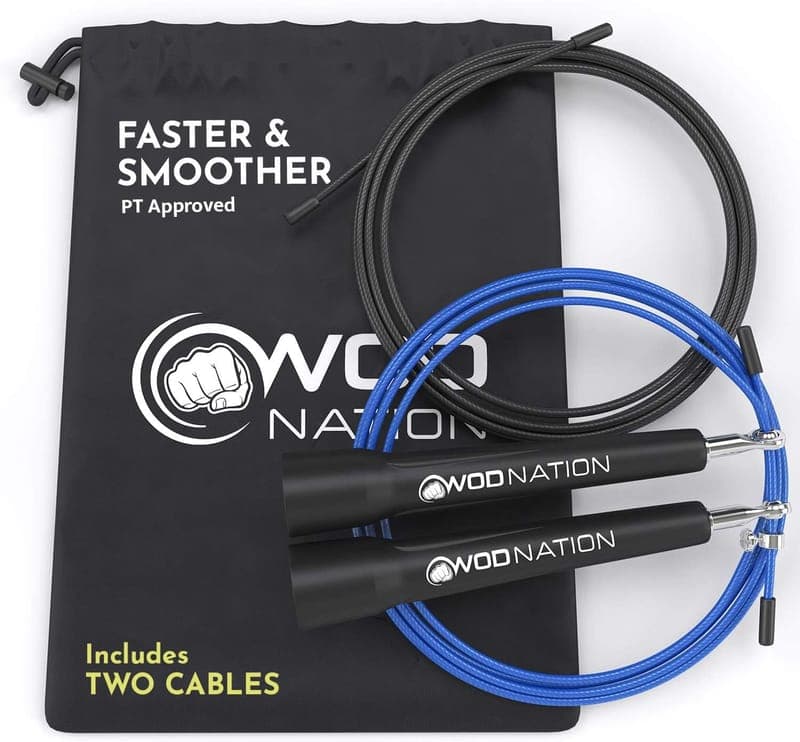
A real speed rope
Ball-bearing handles and an adjustable cable so it actually spins fast — not the tangly $3 rope. The single most portable piece of soccer conditioning gear.
Affiliate Disclosure: As an Amazon Associate, we earn from qualifying purchases. This helps support our gym at no extra cost to you.
7. Anti-rotation core (Pallof press & planks) — shield the ball, win contact
A strong core isn't about abs — it's about shielding the ball, holding off a defender, and transferring power from your legs to your strike without leaking it. Anti-rotation moves like the Pallof press (resisting a band's pull as you press it straight out) and hard planks train the core to stay stiff under pressure, which is exactly what contact in a match demands.
8. Calf raises & ankle work — sprint power and ankle-sprain insurance
Your calves and ankles absorb and return force on every single step — and ankle sprains are one of soccer's most common injuries. Heavy calf raises build the spring in your stride, and single-leg balance work (standing on one foot, eyes closed, then on an unstable surface) builds the ankle stability that keeps you upright when you land awkwardly. Boring, but it keeps you on the field.
Conditioning: train like a match, not a marathon
A soccer match is dozens of short, all-out sprints with jogging in between — not a steady 90-minute jog. So train it that way. Interval work (sprint hard, recover, repeat) builds the exact engine the game demands far better than long, slow cardio. Hill sprints, shuttle runs, and rope intervals all beat plodding on a treadmill.
Recover in the Miami heat — or pay for it on the pitch
Training and playing in Miami's summer heat drains you fast, and dehydration kills speed and decision-making before you even feel it. Hydrate with electrolytes, not just water — see our full guide on staying hydrated in the Miami heat. On the supplement side, creatine is one of the few with strong evidence for repeated-sprint sports like soccer: it helps you recover between sprints and train harder.
Heat recovery and repeated-sprint fuel
Electrolytes to replace what you sweat out in the Miami sun, and creatine — the most evidence-backed supplement for sprint-based sports.
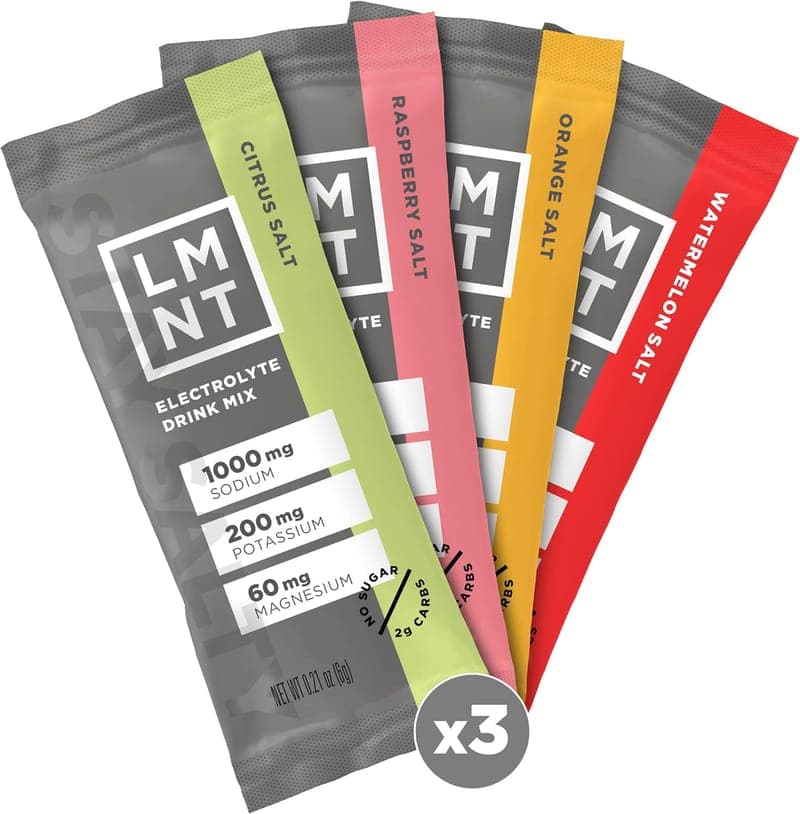
LMNT Zero Sugar Electrolytes
Variety pack, keto-friendly, 12 count
4.6(47.3K)View on Amazon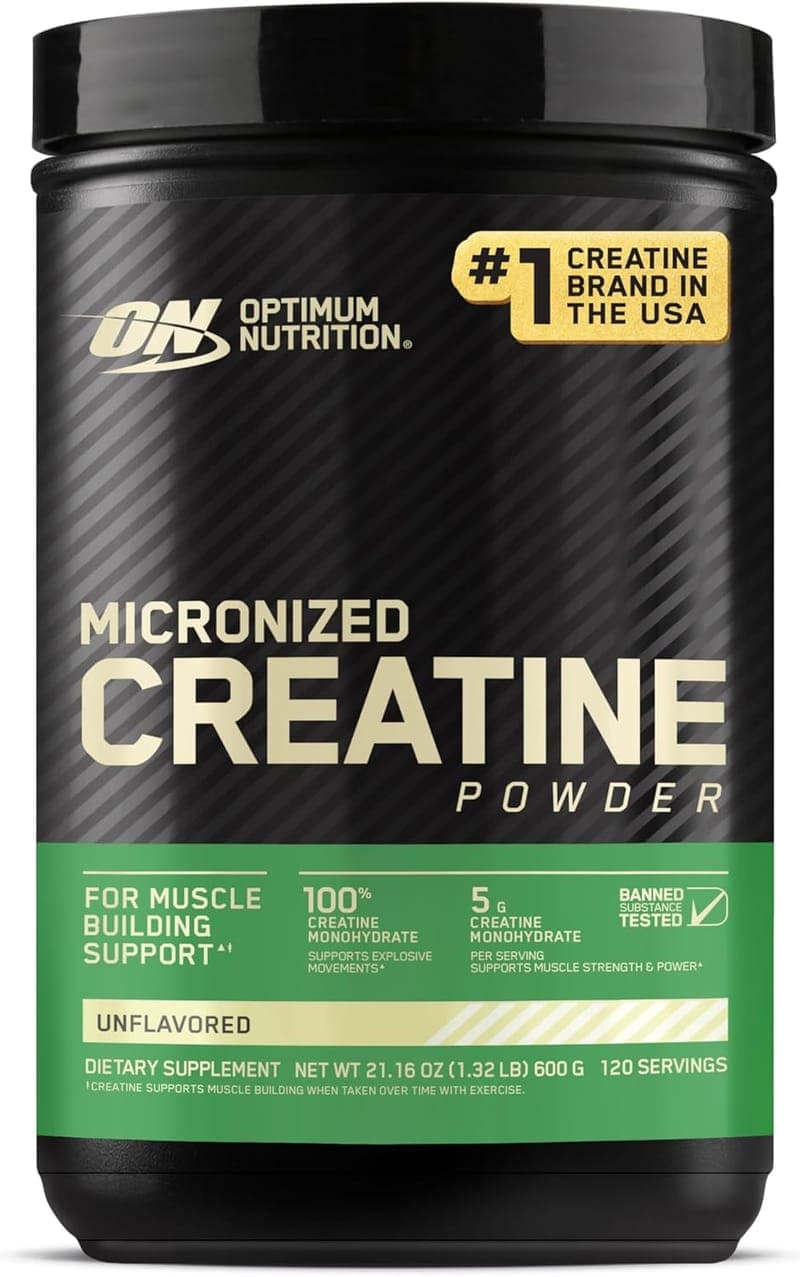
ON Creatine Monohydrate
Micronized, 5g per serving, 120 servings
4.6(108K)View on Amazon
Affiliate Disclosure: As an Amazon Associate, we earn from qualifying purchases. This helps support our gym at no extra cost to you.
Soccer training: frequently asked questions
What gym exercises make you a better soccer player?
Do soccer players need to lift weights?
How can I get faster for soccer?
How do I stop pulling my hamstring playing soccer?
How many days a week should a soccer player train in the gym?
Train like the players you're watching this summer
Bring this program somewhere with real racks, turf, and coaches who'll check your form. Gallo 8 Gym in Little Havana — bilingual coaches, no contract, and a back to school deal of 3 months for $54 for students and school staff.
See the back to school dealTrain with us in Little Havana
Gallo 8 Gym is an independent Hispanic community gym — no contracts, no signup fees, right across from Miami Dade College.